

Philippines 'classic' short tour.
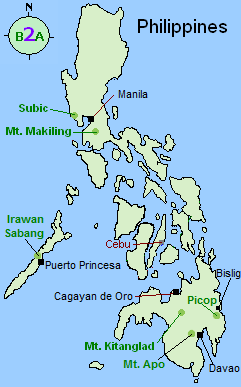
Luzon, Mindanao and Palawan
Tour leaders; Stijn De Win, Pete Simpson.
6 - 21 February 2025 ; places available.
The Philippine archipelago has been geographically isolated from mainland Asia for a long period of time resulting in an avifauna with extremely high endemism. Birds in the Philippines are special. Of course we have the Philippine Eagle but the first time visitor will also be amazed by such strikingly attractive species as Silvery Kingfisher, Philippine Trogon or Steere’s Pitta. Sadly enough the habitat of these birds is severely threatened. On this tour, we visit some of the last remaining but excellent tropical forests in which we should find many of the wonderful rarities and endemics.
This is a relatively short journey with an emphasis on comfortable and relaxed travel to some of the most enjoyable birding areas in the country. "This tour does focus on getting a maximum number of endemics possible within the time frame." The itinerary offers a comprehensive cover of only the very best birdwatching sites in the Philippines, hence it is highly productive without making this a tiring long tour. Those indeed are birding sites that never fail to deliver on superb birds. We will work hard to serve you an extraordinary Philippines experience!
2009 / 2010 / 2011! / 2012 Feb. / 2012 March / 2013 / 2014 / 2015 / 2016 / 2019
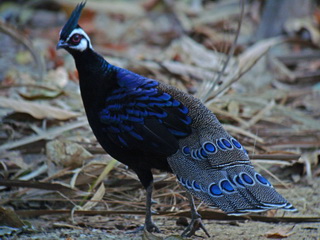
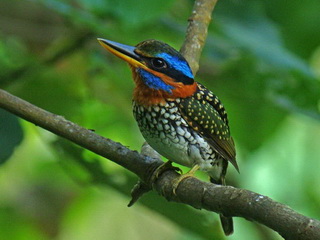
Palawan Peacock PheasantSpotted Kingfisher

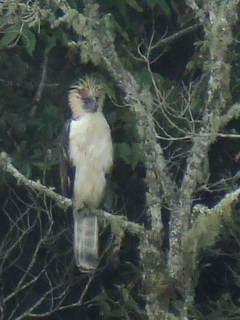
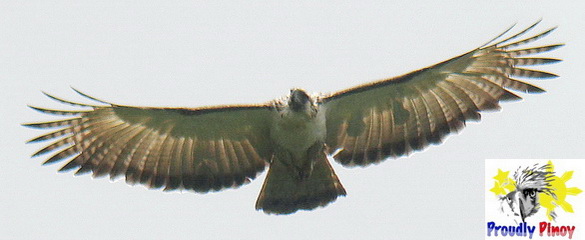
"Excellent double chance on the Eagle on this tour!!"
First at Kitanglad, then Mt. Apo in Davao as a back-up site -just in case!
Day 1
Having arrived in Manila the day previous we make this an
early start for a visit to La Mesa Eco-park as it has been a
good spot to catch up with one of the more difficult
endemics, the Ashy Thrush.
Next we travel to Candaba Marsh, a good spot to get the
Philippine Duck on our list as well as a host of waterbirds
including the scarce Purple [Philippine] Swamphen, Black
Bittern, Barred Rail, Eastern Marsh Harrier, Painted Snipe,
Oriental Pratincole... The place does attracts vagrants
regularly and these did include Baer's Pochard and Baikal
Teal in February of the last couple years.
We should reserve the last hour of daylight for some initial
birding in the excellent forests on the Subic Bay naval
base. Being a good time of day it is no wonder a Spotted
Wood Kingfisher was the first bird off on our last 2016
tour. Our hotel, with pool, is located by the beach inside
the Subic Bay Free-port Zone.
Day 2
A full host of new endemics and other delights wait for us
at Subic. By the start of our tour this will provide us with
the perfect introduction to some of the most enjoyable yet
rewarding birding found in the country. Green Racquet-tail,
Sooty Woodpecker, Rufous Coucal, White-fronted Tit, Purple
Needletail, Yellow-breasted Fruit-Dove, Blackish Cuckoo
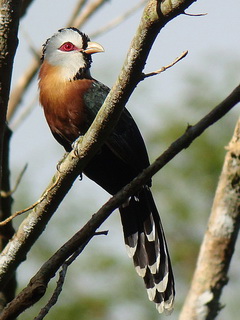
Shrike, Red-crested Malkoha, Scale-feathered Malkoha,
White-browed Shama, Philippine Hawk Owl, Chocolate Boobook,
Philippine Falconet, Luzon Hawk Eagle, Guaiabero, Luzon
Hornbill, Stipe-sided Rhabdornis…
This day will also come with a proper lunch and some rest
back at the hotel during the hot hours of day. We will be
out for owling in the evening.
Day 3
Another full morning is certainly needed to do the Subic
rainforest any justice. After lunch we travel to Los Banos
-Mt Makiling. Enroute we first visit daytime stake-outs for
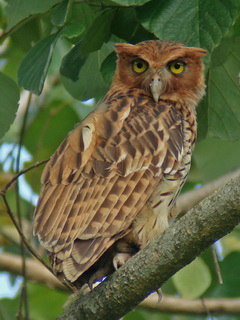
Philippine Scops Owl and Philippine Eagle Owl. Our hotel
comes with swimming pool again, and this time it’s fed by
water from the hot springs. Makiling still has some volcanic
activity indeed.
Day 4
We spend the day birding at Makiling. This includes sites on
the spacious green university campus and the botanical
garden. We also walk part of the track up the mountain which
preserves some of the best rainforest left on Luzon. Birding
can be a bit slow here but with the good time birding at
Subic we had, our target species list for this site got
reduced greatly so we can focus on what is important. Over
50 endemic bird species have been found at Makiling and
species we would likely still want to look for include
Indigo-banded Kingfisher, Flaming Sunbird and Spotted
Buttonquail.
Day 5
An early morning flight will take us from Manila to Cagayan
de Oro where our driver and minivan wait to transfer us to
Damitan village, jump-off point for Kitanglad. From here Del
Monte lodge is just two hours away on the mountain. We
then spend the afternoon looking for the first of the
endemic bird species and other specialties above the camp.
One of the first birds to notice and common indeed is the
Cinnamon Ibon, a handsome species certainly not done any
justice in the field guide. Note that Ibon is the word for
‘bird’ in Tagalog. Of course it will be the more elusive
species we will focus on, some of the plenty goodies to look
for are Apo Myna, -worth the trip alone-, as well as
Stripe-breasted Rhabdornis, Mc Gregor’s Cuckooshrike,
Red-eared Parrotfinch, Mindanao Racquet-tail, Mindanao
Hornbill, Sulphur-billed Nuthatch and Long-tailed
Ground-Warbler.
Day 6 & 7
‘The’ star bird on Mt.Kitanglad and of course our main
target indeed is the Philippine Eagle (Monkey-eating Eagle)
and we’ll head straight up to the Eagle viewpoint on our
second day. Also the trail above the viewpoint needs a visit
as the forest at this slightly higher altitude is the best
spot to look for White-cheeked Bullfinch, Apo Sunbird,
Amethyst Brown-Dove and better chances on Mindanao
Racquet-tail. Evenings around the camp come with
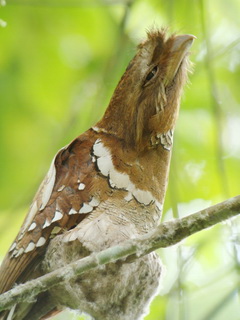
possibilities on Philippine Frogmouth, Philippine Nightjar,
Bukidnon Woodcock and with a bit more luck even Everett's
and Giant Scops Owls. All are present in the immediate
vicinity of the lodge.
Day 8
Another full morning to catch up on any bird species we
might still need on Mt.Kitanglad. After lunch we head down
again for our onward journey to Davao city.
Day 9
This morning we bird near Davao city on the slopes of Mt
Talomo and Mt. Apo.
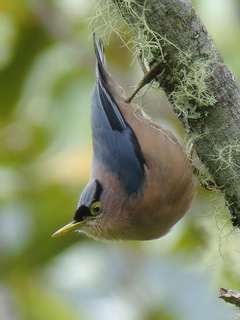
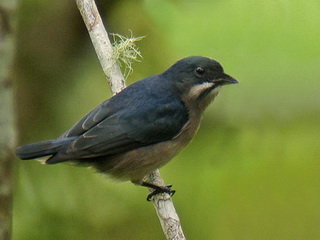
Whiskered Flowerpecker and Cryptic Flycatcher are birds
present here and not otherwise found anywhere else on this
tour if not Philippines! The area has a lot more on offer
but many species are the same as the birds found on
Kitanglad. This includes the Philippine Eagle. Hence we keep
designated time to just one morning which besides getting
the two specialities could double-serve as a back-up for the
Eagle in the unlikely case it was missed on Kitanglad.
After lunch we travel to Bislig where we may already visit
the airfield for the Grass Owls, Blue-breasted Quail and
more. Night in Bislig city.
Day 10 & 11
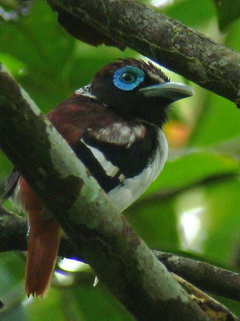
The last remaining bits of rainforest at Picop need little
introduction. Excellent birding in fast disappearing habitat
would describe it all. A couple species may be gone already
these days but on the other hand the list of endemic birds
still clinging on remains very long including; Rufous
Hornbill, Writhed Hornbill, Wattled Broadbill, Philippine
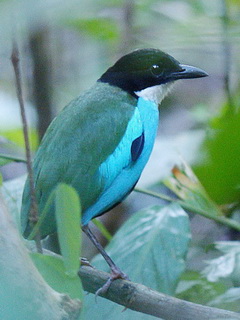
Trogon, Steere's Pitta, Black-headed Tailorbird, Streaked
Ground-Babbler, Blue Fantail, Philippine Oriole, Mindanao
Hawk Owl, Short-crested Monarch, Yellowish Bulbul,
Black-faced Coucal and Silvery, Blue-capped and Rufous-lored
Kingfishers. We may also visit the airfield again in the
late afternoon if desired.
Day 12
A last full morning birding at Picop. After lunch we head
back to Davao city for the night.
Day 13
We'll be on two connecting flights to reach Puerto Princesa
on Palawan. From the airport it is only about 40 min. to
Irawan Eco Park. The forest and second growth here seem ever
more productive. In 2016 we recorded Palawan Hornbill, Blue
Paradise-Flycatcher, White-vented Shama, Palawan
Flowerpecker, Palawan Tit, Lovely Sunbird, Palawan Crow,
Oriental Dwarf Kingfisher, Blue-headed Racquet-tail,
Blue-naped Parrot, Melodious Babbler and Ashy-headed Babbler
from just 1 single location within the park, a 100m stretch
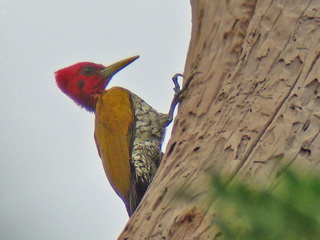
of dirt track. Venturing further may produce Spot-throated
and Red-headed Flameback, Chestnut-breasted Malkoha and
Palawan Flycatcher.
In the evening we hop over to a tiny island just 15 min.
offshore. This is the home of the Mantanani Scops Owl which
was easy enough for us to find in both 2015 and '16.
Day 14
We have another morning birding at Irawan Eco Park. After
lunch we continue to Sabang for birding various locations
along and off the road. Last stop, at around 5pm, will be
Cockatoo viewpoint. Increasingly reliable sightings thanks
to improved protection are a happy note worth mentioning.
Our 2015 tour recorded 5 Philippine Cockatoos and 2016
produced seven birds at the viewpoint. Night in Sabang.
Day 15
Boat trip to the Underground River ranger station. The area
features some good forest and is home to the Palawan Peacock
Pheasant, Philippine Scrubfowl, Stork-billed Kingfisher,
White-vented Shama, Hooded Pitta… There will be time for the
40 min. boat trip into the enormous caves which are
classified as a Unesco World Heritage site. Afternoon
birding near Sabang, and we have another night-birding
option. Night in Sabang.
Day 16
Last morning birding in St. Pauls / Sabang. After lunch we
drive back to Puerto Princesa with birding stops en-route.
Our evening flight back to manila will mark the end of the
tour.
Info note;
Comfortable accommodation in good standard hotels with
private facilities except at the more basic Del Monte lodge
on Mt. Kitanglad. Transport by air-conditioned van. Walking
difficulty is easy to moderate throughout. Weather is mostly
pleasant at this time of the year. Some rain can be expected
however and on sunny days it might get fairly hot at noon.
Food is good, plentiful and hygienic. Bird photography may
often appear a challenge but we always seem to encounter
some good photo opportunities on our trips.
We hope you may enjoy our photo gallery.
Please note all photos on this page taken on previous B2A
trips.
E-mail for bookings
info@birding2asia.com
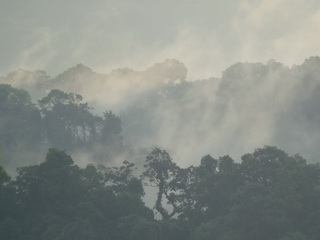
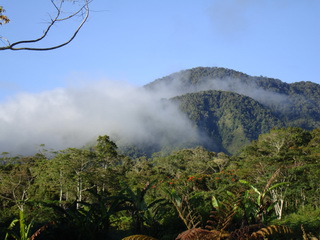
Forest on Mount MakilingMount Kitanglad view
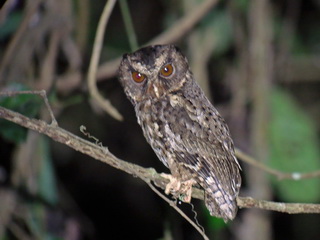
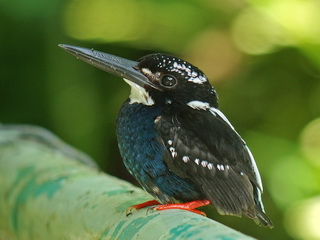
Palawan Scops OwlSouthern Silvery Kingfisher
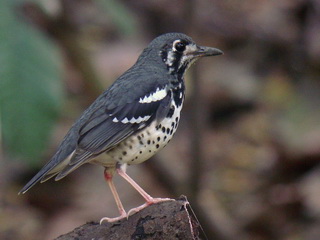
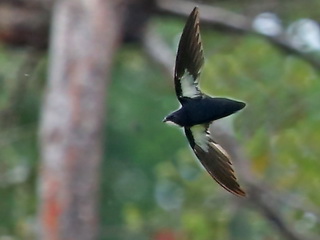
Ashy ThrushPhilippine Needletail
Whiskered FlowerpeckerRed-headed Flameback